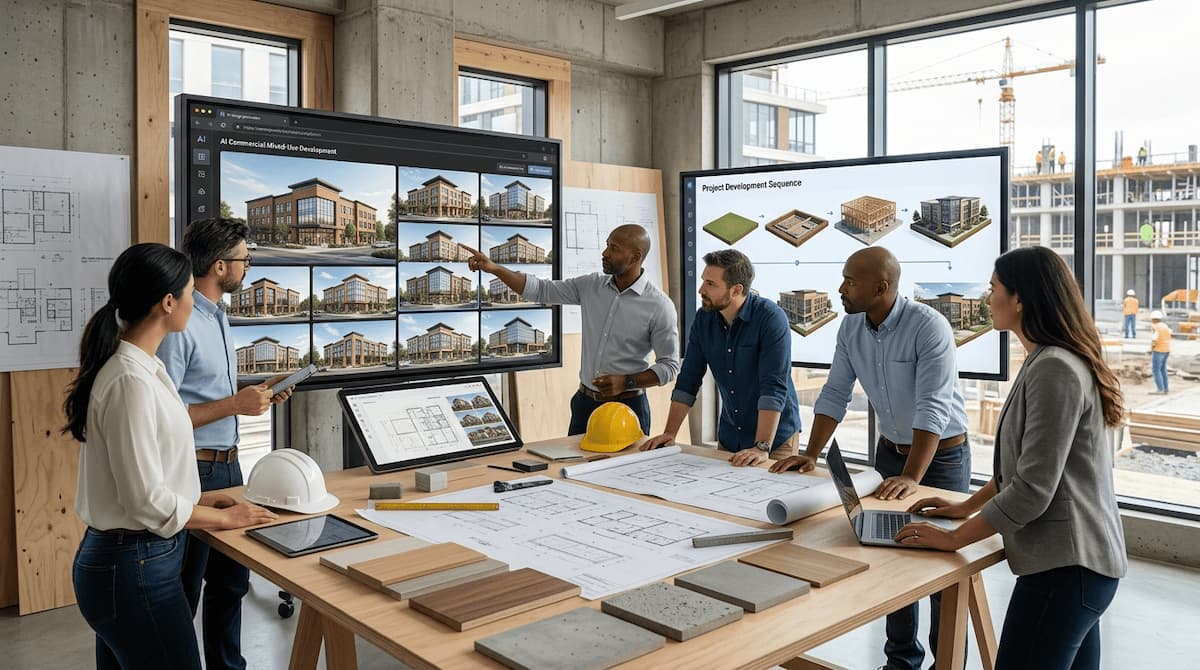
Construction projects often begin with an idea that is difficult to picture. A client may have a rough description of a new extension, a contractor may want to discuss an alternative finish, or a design team may be considering several ways to use a space. Drawings and plans are essential later, but an early visual reference can make those first conversations easier.
An AI Image Generator can help create that starting point with Higgsfield for creative visualisation and early stage design exploration. By using a written description, reference image or a combination of inputs, teams can explore how a proposed space, building feature or exterior treatment might look. These images are not a substitute for architectural drawings or technical documentation, but they can make an early idea easier to see and discuss.
For construction teams, the real value is not simply producing attractive pictures. It is being able to explore possibilities before committing significant time and resources to one direction.
Making Early Construction Ideas Easier to Discuss
A construction project can involve many people with different priorities. A homeowner may focus on appearance, an architect may think about design and functionality, while a contractor is already considering materials, access and how the work could be carried out.
An AI Image Generator can provide a common visual reference for these conversations. Suppose a homeowner wants to understand what a rear extension might look like with different exterior finishes. Instead of discussing brick, timber or rendered walls only through words, the team can create rough visual examples of each approach.
These images can also be useful when a project is still at the brainstorming stage. A builder might be asked whether a particular design direction is worth exploring, while a client may not yet know exactly what they want. Seeing several alternatives can make the discussion more specific.
That does not mean the generated image should determine the final design. It simply gives everyone something to react to.
This can be particularly helpful for smaller construction businesses that regularly need to explain ideas to customers. A visual concept can sometimes communicate an intention more quickly than several paragraphs of description.
Exploring Different Approaches Before Work Begins
One of the more practical uses of an AI Image Generator is comparing possibilities.
Consider a homeowner planning to renovate the front of a property. There may be several questions to answer. Should the entrance have a different finish? Would new windows suit the existing exterior? Could landscaping change the overall appearance? What might the property look like with a more contemporary treatment?
Creating rough concepts can help organise those questions before the project moves into detailed design.
The same principle can apply to larger projects. Construction teams may want to explore ideas for communal areas, commercial interiors, landscaping, office spaces or public facing sections of a development.
Higgsfield can be considered as part of this early creative process when teams want to experiment with different visual directions. The purpose is not to replace professional design work, but to make the initial discussion more visual.
Higgsfield can also be useful when several possible treatments need to be compared quickly. A team can look at different concepts and decide which direction deserves more detailed consideration.
This kind of experimentation may save time later because weak ideas can be identified before they become part of a more involved design process.
Where Visualisation Can Help Construction Teams
There are several stages where generated imagery may provide value.
For client presentations, an early visual can make a proposal easier to understand. Clients are not always familiar with architectural drawings, elevations or construction terminology. A realistic looking concept can provide an additional reference point while the technical information is explained.
For renovation projects, visualisation can help homeowners compare possible finishes, colours, layouts and exterior treatments.
For commercial projects, teams can explore interior concepts, reception areas, retail environments or workplace layouts before the final design is established.
For landscaping and external works, images can show possible arrangements of paths, planting, seating, lighting or other features.
An AI Image Generator can also help when a construction company wants to explain an idea to someone outside the technical team. A project manager, for example, may need to communicate a proposed change to a client who understands the desired outcome but does not regularly work with construction drawings.
The generated image becomes a conversation tool rather than a final specification.
Turning a Rough Description Into a Visual Concept
The usefulness of an AI Image Generator depends partly on how clearly the project idea is described.
A vague request such as “modern house extension” can produce a wide range of results. A more useful description might identify the type of property, approximate setting, desired materials, general architectural character and the part of the building being considered.
Reference images can also help establish the direction. If a team already has photographs of the property or examples of materials they are considering, those references can provide useful context.
Higgsfield is one option for experimenting with visual concepts, particularly when the aim is to explore several creative directions rather than settle immediately on one finished image.
The process is usually more productive when teams treat the first result as a draft. If the image does not reflect the intended idea, the description can be adjusted and another version created.
That approach is closer to sketching than final design. The purpose is to explore.
What AI Generated Images Cannot Tell You
There is an important limitation that construction professionals should keep in mind.
An AI Image Generator can create a convincing picture of a building, room or construction concept, but visual realism does not make the image technically accurate.
A generated extension may look attractive while ignoring the actual dimensions of the property. A roof concept may appear possible without accounting for structural requirements. A window arrangement may look appropriate without considering planning restrictions, building regulations, ventilation or fire safety.
The same issue applies to materials. An image can suggest the appearance of brick, timber, concrete or another finish, but it cannot confirm the exact product, specification, performance or installation requirements.
For those reasons, generated images should remain separate from technical decisions.
Architectural drawings, structural calculations, site surveys, specifications, building regulations and professional advice still have their proper roles.
This distinction is particularly important when an image is shown to a client. It should be clear that the picture represents a concept rather than a promise of what the finished project will look like.
Using Visual Concepts Without Losing Practical Judgement
Construction is a practical industry. A design that looks good on screen still has to work on a real site.
Before moving from an AI generated concept to a real proposal, the team needs to consider measurements, materials, access, existing structures, costs, planning requirements and the intended use of the space.
An AI Image Generator is therefore most useful before these decisions are finalised. It can help identify preferences and encourage questions that might otherwise appear later.
For example, a client might see a concept showing a large glazed extension and decide that they like the amount of natural light. That could lead to a more detailed conversation about glazing options, orientation, heat gain, privacy and structural requirements.
The AI image has not solved those issues. It has simply helped reveal what the client wants to discuss.
Higgsfield fits into the same principle. Higgsfield can support creative exploration, but the construction team remains responsible for deciding whether an idea is practical.
Higgsfield AI creative suits can also be useful when different visual styles are being explored for a presentation or early concept. However, those visual treatments should still be checked against the actual site and project requirements.
Helping Clients Understand Design Choices
Construction businesses often spend considerable time explaining options to clients. This is especially true when the client is making decisions about finishes or changes that are difficult to imagine.
An AI Image Generator can provide an additional way to communicate these options.
Imagine a homeowner deciding between two exterior finishes. Written descriptions may not be enough to make the difference obvious. A pair of illustrative concepts can give the homeowner a better sense of the intended direction.
The same approach can work for kitchens, bathrooms, extensions, gardens, offices and commercial interiors.
It can also help clients identify what they do not like. Sometimes that is just as valuable as finding the preferred option. A visual concept may reveal that a particular colour, material or layout feels wrong before money is spent on samples or construction.
The important thing is to label such images appropriately. They should be presented as illustrative concepts, not photographs or guaranteed representations of the finished work.
A More Efficient Way to Explore Ideas
The biggest advantage of an AI Image Generator may be the speed at which teams can test different ideas.
Traditional design development has its own proper process, and detailed work cannot simply be replaced by generated imagery. But during the earliest stage, teams often need to explore possibilities before knowing exactly which direction they want.
That is where quick visual experiments can be useful.
A contractor could discuss a client’s preferences, create a few rough directions and use those results to narrow the conversation. An architect or designer could then take the preferred concept into the appropriate professional workflow.
Higgsfield can form part of that experimentation when a team wants to develop different creative directions. Higgsfield should be viewed as an aid to the early process rather than a substitute for the people responsible for the project.
Using AI Responsibly on Construction Projects
There are also practical considerations around information and privacy.
Construction companies should be careful when uploading photographs, plans or other project information to external AI services. Confidential client information, unreleased designs and sensitive project details should be handled according to the company’s policies and the relevant platform’s terms.
Teams should also check the licensing and permitted uses of generated material before using it in commercial presentations, advertising or other public facing work.
Most importantly, generated imagery should never be used to hide uncertainty. If a design has not been approved, surveyed or technically assessed, the image should not give the impression that those steps have already happened.
An AI Image Generator works best when everyone understands what the image represents and what it does not.
Turning Visual Ideas Into Practical Decisions
A generated concept can be a useful starting point for a conversation, but it should eventually lead back to real project information. Once a team has identified a preferred direction, the next stage should involve checking the available space, materials, costs and technical requirements.
This also gives clients an opportunity to ask better questions. A visual may highlight details that were not obvious from an initial discussion, such as the position of windows, the appearance of a particular finish or how a proposed feature relates to the existing building.
The aim is not to make the generated image the decision itself. Instead, it can help construction professionals and clients move from a broad idea towards a more informed discussion about what is actually possible.
Final Thoughts
An AI Image Generator can give construction teams a useful way to explore project ideas before detailed design and construction decisions begin. It can help clients understand possible finishes, allow teams to compare approaches and make early conversations more concrete.
Its role is best kept within the visualisation and brainstorming stage. It cannot replace measurements, drawings, calculations, surveys, planning checks, building regulations or professional construction knowledge.
Higgsfield is one option for teams interested in experimenting with these early concepts. Higgsfield can help explore different visual approaches, while Higgsfield may offer additional creative directions for presentations and concept work.
The strongest approach is a balanced one. Use an AI Image Generator to explore what might work, then use professional design, engineering and construction processes to establish what will actually work.


